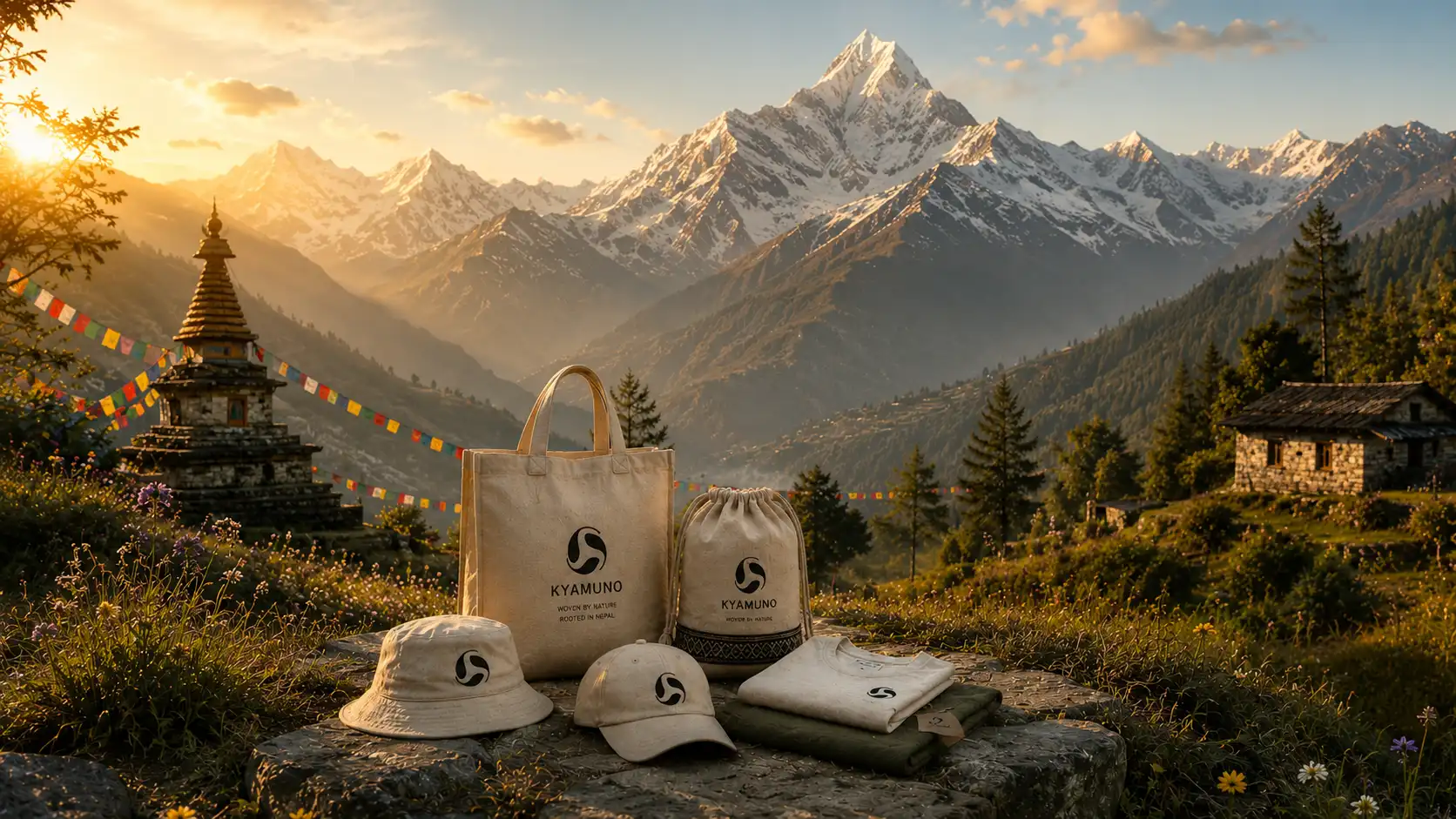
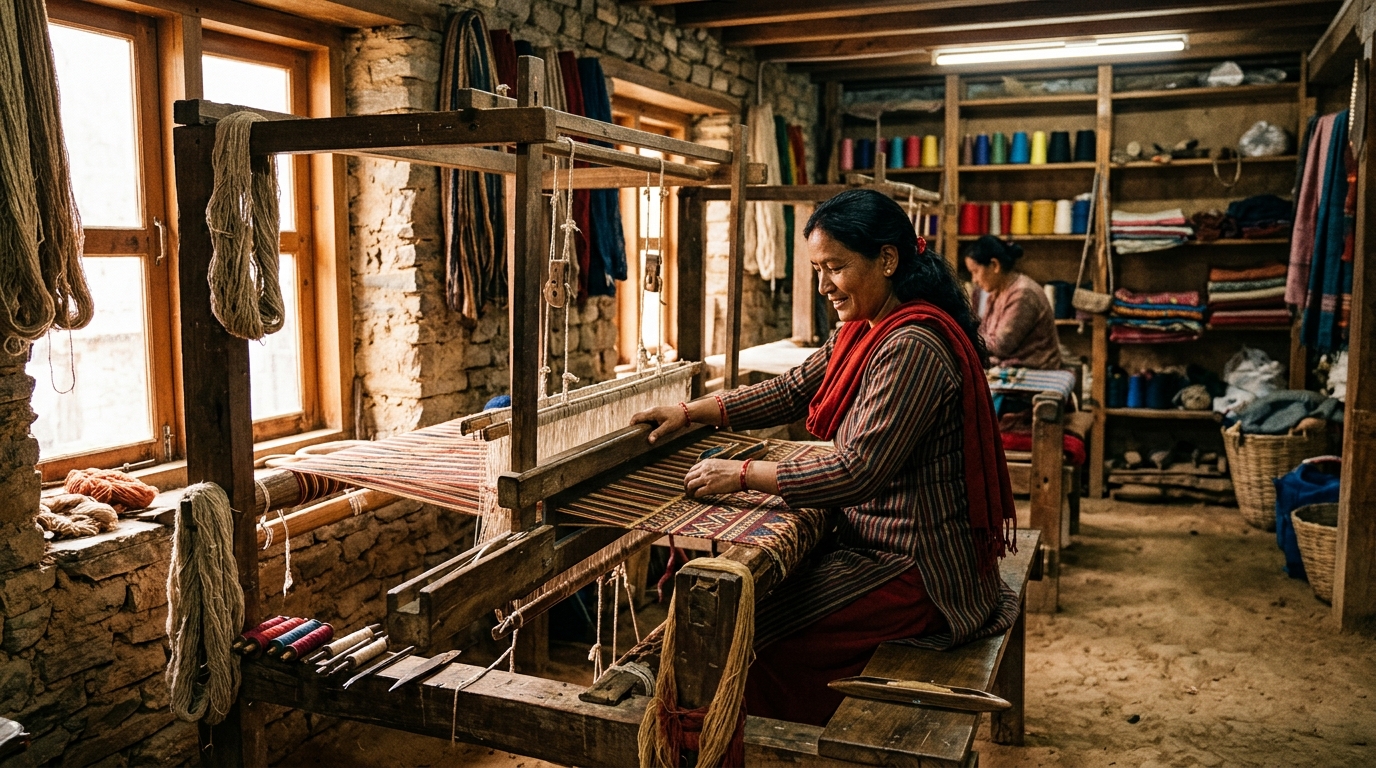
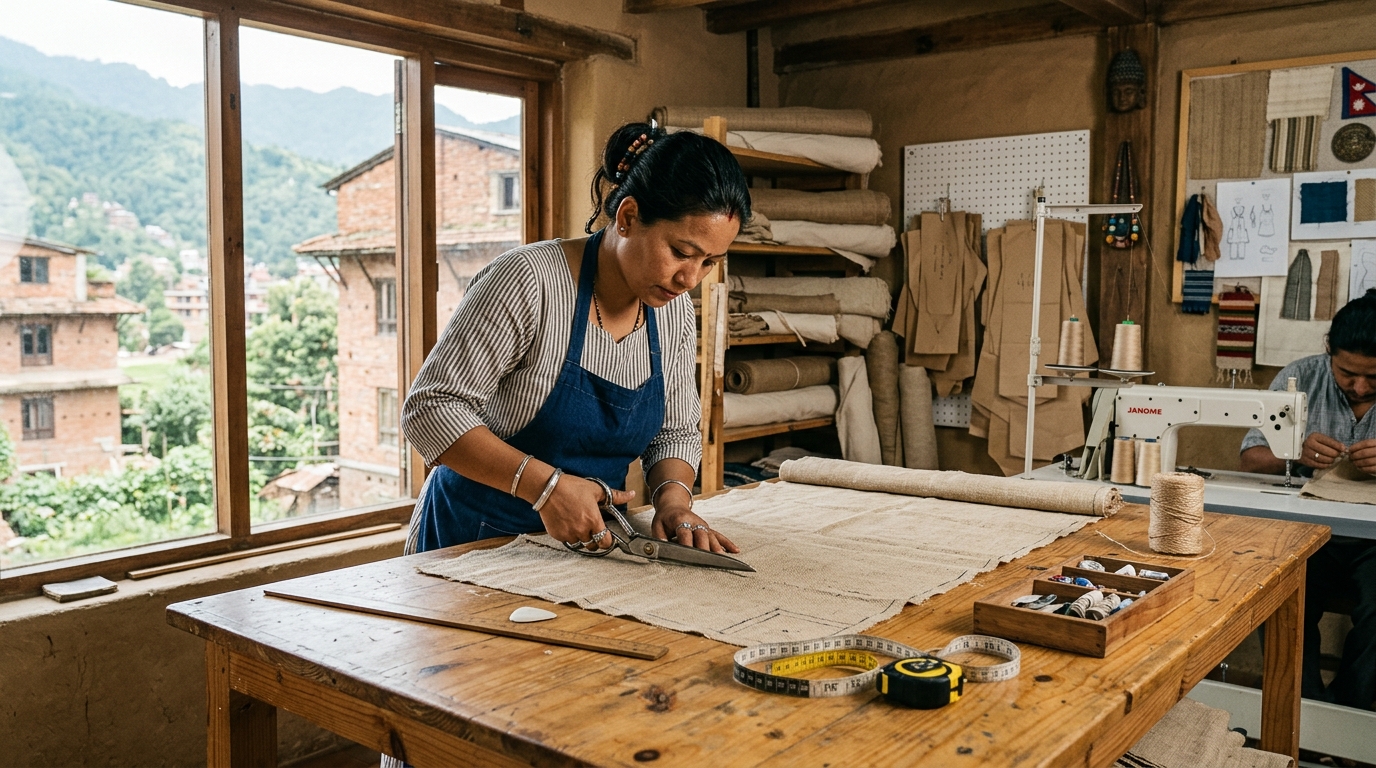
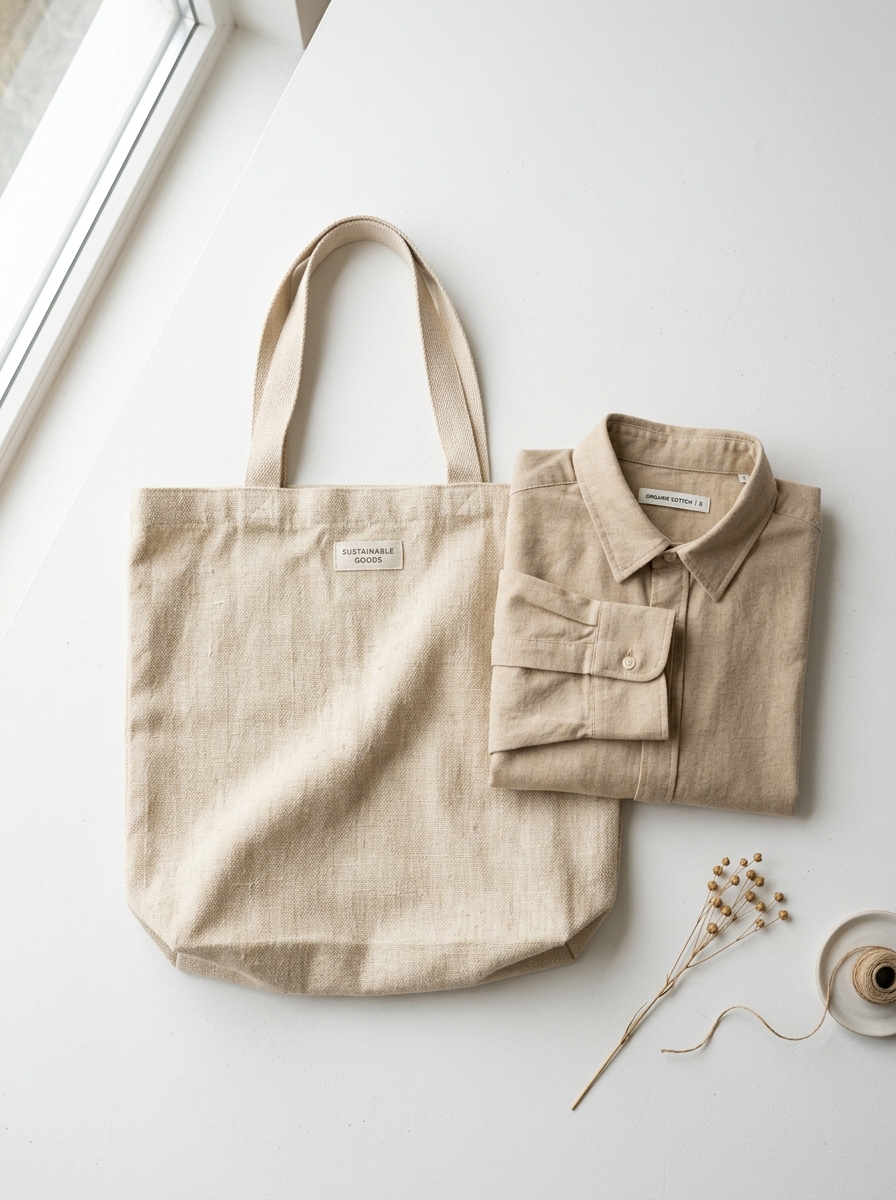
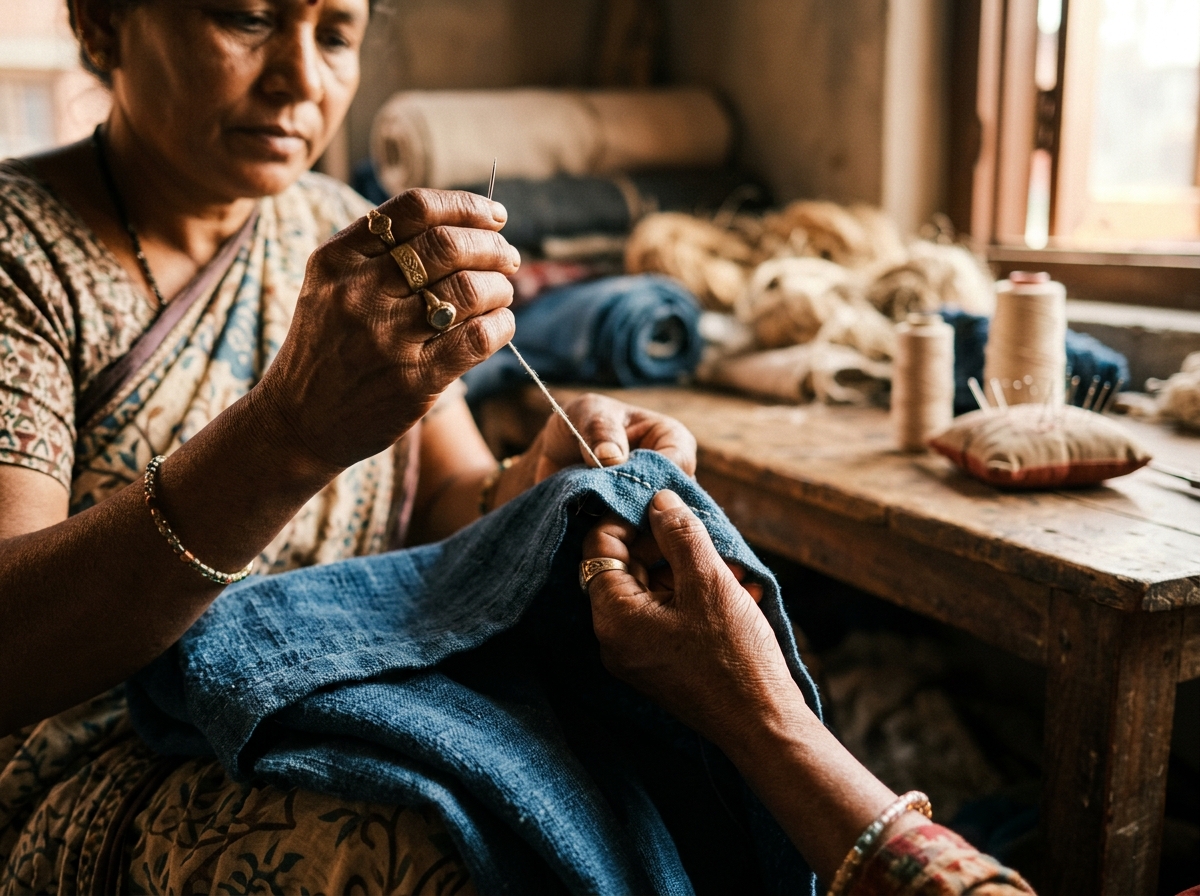
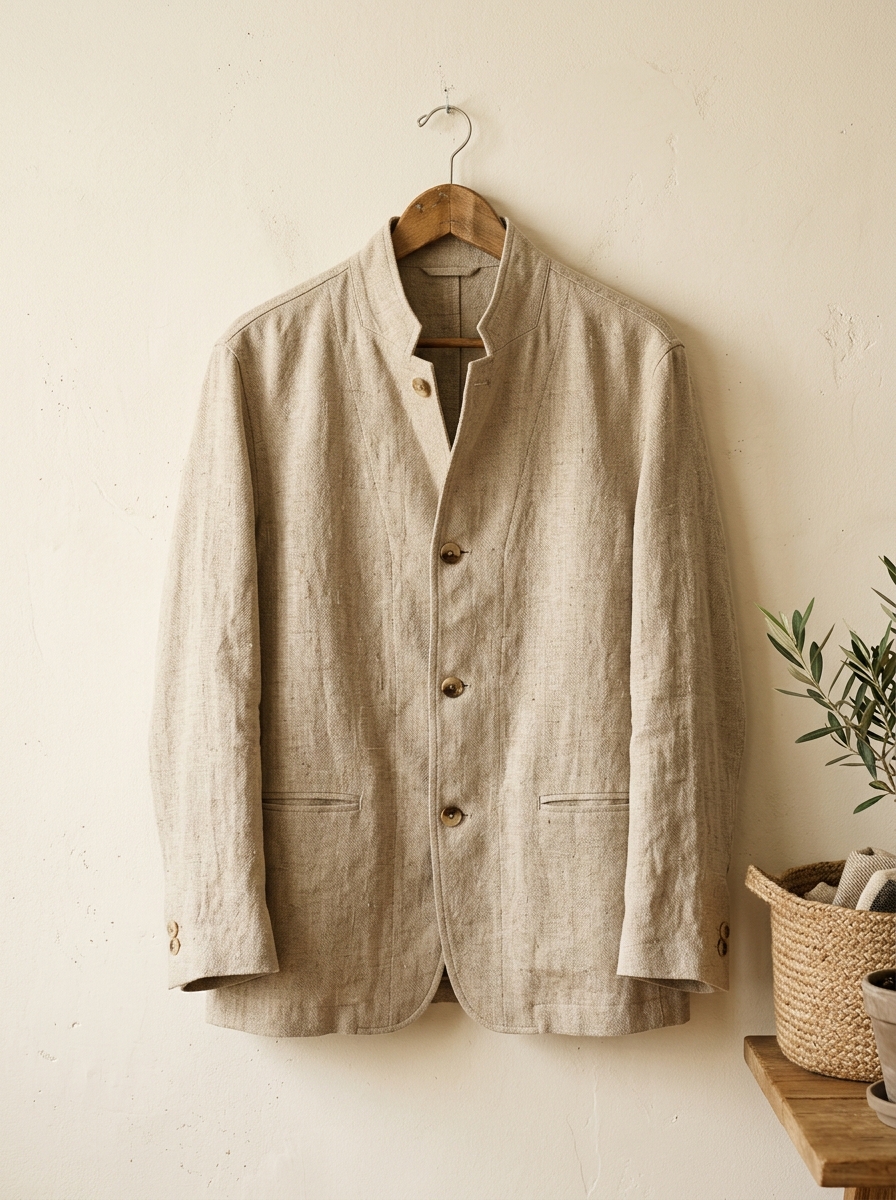
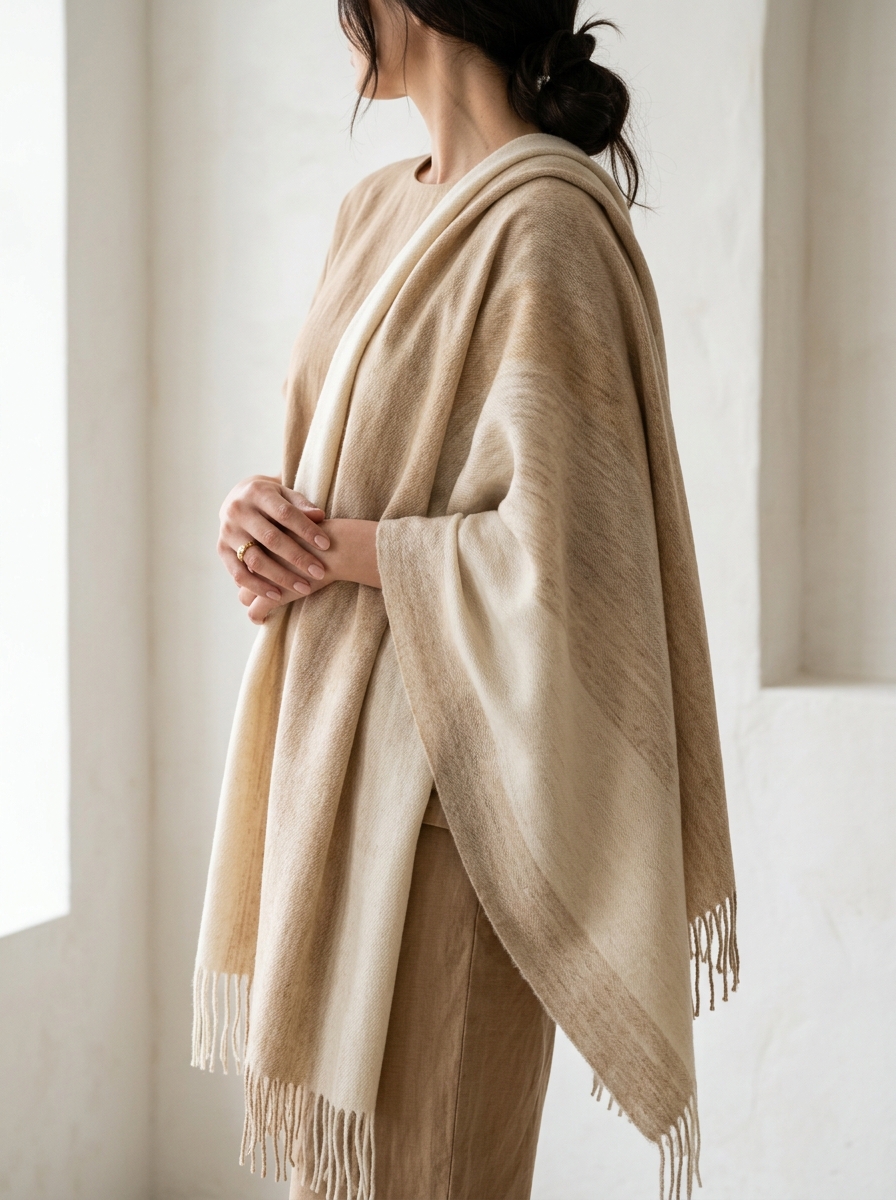
Kyamuno is a sustainable clothing brand based in Kathmandu, Nepal. We design and produce small-batch garments using natural, lower-impact fibers (hemp, organic cotton, and pashmina), all cut and sewn by skilled makers in women-led workshops within the Kathmandu Valley. Every garment is made to order or in limited runs, so nothing sits in a warehouse and nothing goes to waste.
We believe that fashion can be both beautiful and responsible. Our pieces are designed with longevity in mind: classic silhouettes, natural textures, and construction quality that improves with every wash. When you buy from Kyamuno, you're buying something that was made slowly, intentionally, and as close to its raw materials as possible.
Nepal has one of the oldest hemp cultivation traditions in the world. Himalayan hemp (locally known as Bhang) has been grown and woven across the hills of Nepal for centuries, long before industrial textile manufacturing arrived. Hemp fibers are naturally strong, breathable, and antimicrobial. They require no synthetic fertilizers, very little water, and actually improve soil health over time.
At Kyamuno, we work with hemp sourced from small hill farms in mid-Nepal, spun and woven by local cooperatives before arriving at our Kathmandu workshop. The result is a fabric that carries a real story, getting softer, stronger, and more characterful the longer you wear it.
Key facts about Himalayan hemp:
- • Uses 50% less water than conventional cotton per kilogram of fiber
- • Requires zero pesticides, herbicides, or synthetic inputs
- • Absorbs 4x more CO₂ per hectare than equivalent tree stands
- • Fully biodegrades within 8–12 weeks in soil
- • Fibers strengthen with each wash rather than degrading
Conventional cotton is one of the most chemically intensive crops in the world. Organic cotton is grown without synthetic pesticides or fertilizers, uses significantly less water, and supports healthier soil and farming communities. Nepal and the surrounding Himalayan region produce some of the finest organic cotton in South Asia, and we choose it for every piece where cotton is the right fiber for the garment.
Our organic cotton is certified and traceable: we know where it came from, who ginned and spun it, and how far it traveled before it reached our cutters. This is the transparency we think every clothing brand should offer.
Why organic cotton matters:
- • 91% less water used compared to conventional cotton farming
- • Zero synthetic pesticides or genetically modified seeds
- • GOTS certified from field to finished garment
- • Rain-fed irrigation in Nepal’s Terai lowlands
- • Supports 40,000+ smallholder farming families across Nepal
True pashmina comes from the fine undercoat of the Changthangi goat, raised at high altitude on the Himalayan plateau. The fiber is hand-combed, hand-spun, and traditionally woven into shawls, wraps, and lightweight garments of extraordinary softness. Nepal, and especially the Kathmandu Valley, has been the global center of pashmina craftsmanship for hundreds of years.
At Kyamuno, we work only with certified pure pashmina with no mixing with synthetic fibers and no mislabeling. Our pashmina pieces are woven by master weavers in Kathmandu, using both traditional pit-looms and refined hand-frame techniques. A Kyamuno pashmina is an heirloom, not a seasonal item.
The pashmina process:
- • Fiber diameter: 12–16 microns (finer than cashmere at 15–19)
- • Hand-combed from Changthangi goats above 14,000 ft
- • One goat yields only 50–80 grams of raw pashmina per year
- • Hand-spun on traditional wooden spinning wheels (charkha)
- • Woven on 600-year-old pit-loom designs in Lalitpur
Nepal's garment sector employs hundreds of thousands of people, but the global fast fashion industry has put pressure on wages, working conditions, and environmental standards across the supply chain. We've built Kyamuno as a direct counter to that pressure: a brand that treats its makers as the skilled professionals they are, pays on time and fairly, and never trades speed for safety.
Our workshops are small, visited regularly, and located within a few kilometers of our design studio. We know the names of the people who make our clothes. That proximity isn't a coincidence, it's the model. Ethical fashion, to us, means supply chains short enough to hold accountable.
Our ethical commitments:
- • Living wages paid 30% above Nepal’s minimum garment wage
- • Bi-annual independent wellbeing audits at every partner workshop
- • Zero child labor policy with third-party verification
- • Flexible working hours for primary caregivers
- • Annual profit-sharing bonuses for long-term artisans
The slow fashion movement is a response to the environmental and human cost of fast fashion (overproduction, underpayment, synthetic waste, and disposable design). Slow fashion means buying fewer, better things. It means choosing garments made from natural materials, by people paid fairly, in quantities that match real demand rather than speculative trend cycles.
Kyamuno runs on a slow fashion philosophy. We release new pieces infrequently and intentionally. We don't hold sales to move stock we shouldn't have made. We price honestly, so the maker's wage is never the first thing cut. If you're looking for sustainable wardrobe essentials that will outlast a dozen trend cycles, you're in the right place.
The fast fashion problem:
- • 92 million tonnes of textile waste produced globally each year
- • 10% of global carbon emissions come from fashion industry
- • Average garment worn only 7–10 times before disposal
- • 85% of all textiles end up in landfills or incinerators
- • A Kyamuno garment is designed to be worn 200+ times over many years
The majority of garment workers in Nepal are women, yet the majority of leadership in export-oriented factories is not. Kyamuno was designed differently. We partner exclusively with workshops where women hold meaningful roles: as cutters, finishers, pattern-makers, and studio leads. We pay a living wage, provide scheduled advance payments, and conduct annual wellbeing reviews with every partner workshop.
This is not a marketing position. It's the operating structure. When you wear a Kyamuno piece, it was almost certainly made by a woman in Kathmandu who was paid fairly, worked in a safe environment, and had a direct say in how her workshop runs.
Women in our supply chain:
- • 78% of our artisan workforce are women
- • 3 women-led workshops across Lalitpur and Kathmandu
- • Women hold 60% of senior roles (cutters, pattern-makers, leads)
- • On-site childcare provided at two partner workshops
- • Annual skills training and upskilling programs funded by Kyamuno
We ship directly from our Kathmandu workshop to over 40 countries worldwide. Every order is packed in compostable, plastic-free packaging and dispatched within 2–3 business days of completion. For domestic orders, we offer cash-on-delivery across all 77 districts of Nepal.
Our shipping network is designed to minimize carbon miles. Because our entire supply chain operates within Nepal, we consolidate shipments at our Kathmandu workshop rather than routing through multiple distribution hubs. The result is a lower per-garment carbon footprint than most domestic fashion brands.
Shipping details:
- • 40+ countries served worldwide
- • Nepal domestic: 2–5 days, COD available all 77 districts
- • International: 5–12 business days with full tracking
- • 100% plastic-free, compostable packaging
- • Carbon-offset shipping available at checkout
Beyond our own label, Kyamuno operates a contract manufacturing division that produces garments, accessories, and textile products for international brands, designers, and retailers. We specialize in small-to-medium production runs using natural fibers, serving brands that share our commitment to ethical production and sustainable materials.
Our workshop capacity covers full-service production: from fiber sourcing and fabric development to pattern making, cutting, sewing, finishing, and direct-to-brand shipping. We work with brands across Europe, North America, Japan, and Australia who need a transparent, ethical manufacturing partner in South Asia.
Contract manufacturing capabilities:
- • Minimum order from 50 units per style/color
- • Full OEM and ODM services available
- • Custom fabric development (hemp, cotton, pashmina, nettle blends)
- • In-house pattern making, grading, and sampling
- • GOTS and OEKO-TEX certified fiber sourcing
- • Lab-dip, strike-off, and prototyping included
- • Factory audit support (BSCI, SEDEX, WRAP compliant)
Every Kyamuno garment ships directly from our Kathmandu workshop to your door, anywhere in the world. We've built a shipping network that covers over 40 countries with full tracking, and we've eliminated plastic from every part of our packaging chain.
For customers in Nepal, we offer cash-on-delivery across all 77 districts with delivery in 2–5 business days. Our domestic logistics partners understand the terrain from Terai lowlands to high mountain districts, ensuring your order arrives safely no matter where you live.
International orders are dispatched via tracked airmail within 3–5 business days. Delivery to major cities in India takes 5–7 days, Southeast Asia 7–10 days, and Europe, North America, and Australia 8–14 days. We provide full end-to-end tracking for every shipment.
Our shipping promise:
- • Plastic-free compostable packaging on every order
- • Full end-to-end tracking for domestic and international
- • Free shipping on orders above Rs. 15,000 (Nepal) / $150 (international)
- • Carbon-offset shipping option available at checkout
- • Easy 30-day returns with prepaid return labels
Estimated Delivery Times
Kathmandu Valley Same-day dispatch
1–2 daysNepal (all 77 districts) COD available
2–5 daysIndia Tracked airmail
5–7 daysSoutheast Asia Full tracking
7–10 daysJapan & South Korea Full tracking
8–12 daysEurope & UK Tracked airmail
8–14 daysUSA & Canada Tracked airmail
8–14 daysAustralia & New Zealand Tracked airmail
8–12 days Kyamuno is not just a retail brand. Our Kathmandu workshop operates a full-service contract manufacturing division that produces garments, accessories, and home textiles for international brands, independent designers, and retailers around the world.
We partner with brands that need a transparent, ethical manufacturing alternative to the conventional fast-fashion supply chain. Whether you're a sustainable label in Berlin, a boutique retailer in Tokyo, or a direct-to-consumer brand in New York, we handle the entire production process from fiber to finished product.
Our capacity covers small-to-medium production runs, typically 50 to 5,000 units per style, making us ideal for emerging brands, limited-edition collections, and artisan-focused product lines. We've produced for brands across Europe, North America, Japan, and Australia, and every production run follows the same ethical standards as our own label.
What we offer:
- • Full OEM and ODM services (design-to-delivery)
- • Custom fabric development and sourcing
- • In-house pattern making, grading, and sampling
- • GOTS, OEKO-TEX, and organic fiber certifications
- • Factory audit compliance (BSCI, SEDEX, WRAP)
- • Private label and white label options
- • Direct-to-brand international shipping
Production Capabilities
Minimum order 50 units per style/color
Maximum capacity 5,000 units per style/run
Lead time (sampling) 2–3 weeks
Lead time (production) 6–10 weeks
Fiber options Hemp, organic cotton, pashmina, nettle, bamboo, raw silk
Product categories Wearables, bags, scarves, home textiles, accessories
Quality control AQL 2.5 inline + final inspection
Payment terms 30% advance, 70% before shipment