
We started because we had to.
Not because it was trendy. Not because sustainability sells. Because Nepal is breaking, and someone had to stop adding to the damage.
Nepal feels global warming before the rest of the world does.
We live in Nepal. We've watched glacial lakes swell above our villages. We've seen monsoon seasons turn erratic, destroying harvests that communities have relied on for generations. We've stood in Kathmandu's streets and breathed air thick with the smoke of burning synthetic textiles from factories that don't care what happens downstream.
Nepal contributes almost nothing to global carbon emissions, yet we suffer some of its worst consequences. Glacial lake outburst floods, unpredictable rainfall, rising temperatures in the Terai lowlands, and the slow disappearance of the traditional farming cycles that our grandparents lived by. This isn't a future problem for us. It's happening now.
And then there's fast fashion. The global garment industry is one of the most polluting industries on earth, producing more carbon emissions than international flights and maritime shipping combined. Synthetic fabrics shed microplastics into our rivers with every wash. Textile dyes pour untreated into waterways that communities drink from. And when the clothes fall apart after 7 or 8 wears, they end up in landfills that will take 500 years to decompose.
Nepal sits right in the middle of this system. Our garment workers stitch fast fashion for global brands, often for wages that can't feed a family. The chemicals damage their health. The waste poisons the land. And the profits leave the country.
Kyamuno was born from watching all of this and deciding we couldn't stay silent. Not because we're a big company with a big solution. Because we're small, and we believe that small is exactly how change starts.
Our belief is simple: make it from the earth, and let it return to the earth.
Every garment Kyamuno makes is cut from natural fibers that grow in Nepal's soil, spun and woven by hand without synthetic chemicals, and sewn without a single piece of plastic in the process. No polyester. No nylon. No acrylic. No synthetic dyes. Just hemp, cotton, pashmina, nettle, and silk, processed the way they've been processed for centuries.
And when the garment has lived its full life, after years of wear and washing and mending, you don't throw it in a landfill. You bury it. And it becomes earth again. That's the cycle we believe in. Not a cycle of extraction and disposal, but a cycle of growth, use, and return.
We're not asking you to buy less, buy better as a slogan. We mean it literally. Buy one good piece made from the earth, wear it for years, and when it's done, let it go back to where it came from. No guilt, no waste, no microplastics, no 500-year landfill sentence.
How We Make Things
From wild mountain fiber to finished garment, every step is done by hand, in Nepal, without chemicals.
Wild Mountain Harvest
Wild hemp and Allo nettle are harvested by hand in late autumn across western Nepal mountain trails above 2,000m altitude.
Stream Retting & Spinning
Stalks are soaked in clean mountain streams, hand-carded, and spun on traditional wooden charkhas into strong natural yarn.
Patan Pit Loom Weaving
Seasoned women weavers in Lalitpur throw shuttles on heritage wooden looms to produce durable 380 GSM heavyweight cloth.
Zero-Waste Tailoring
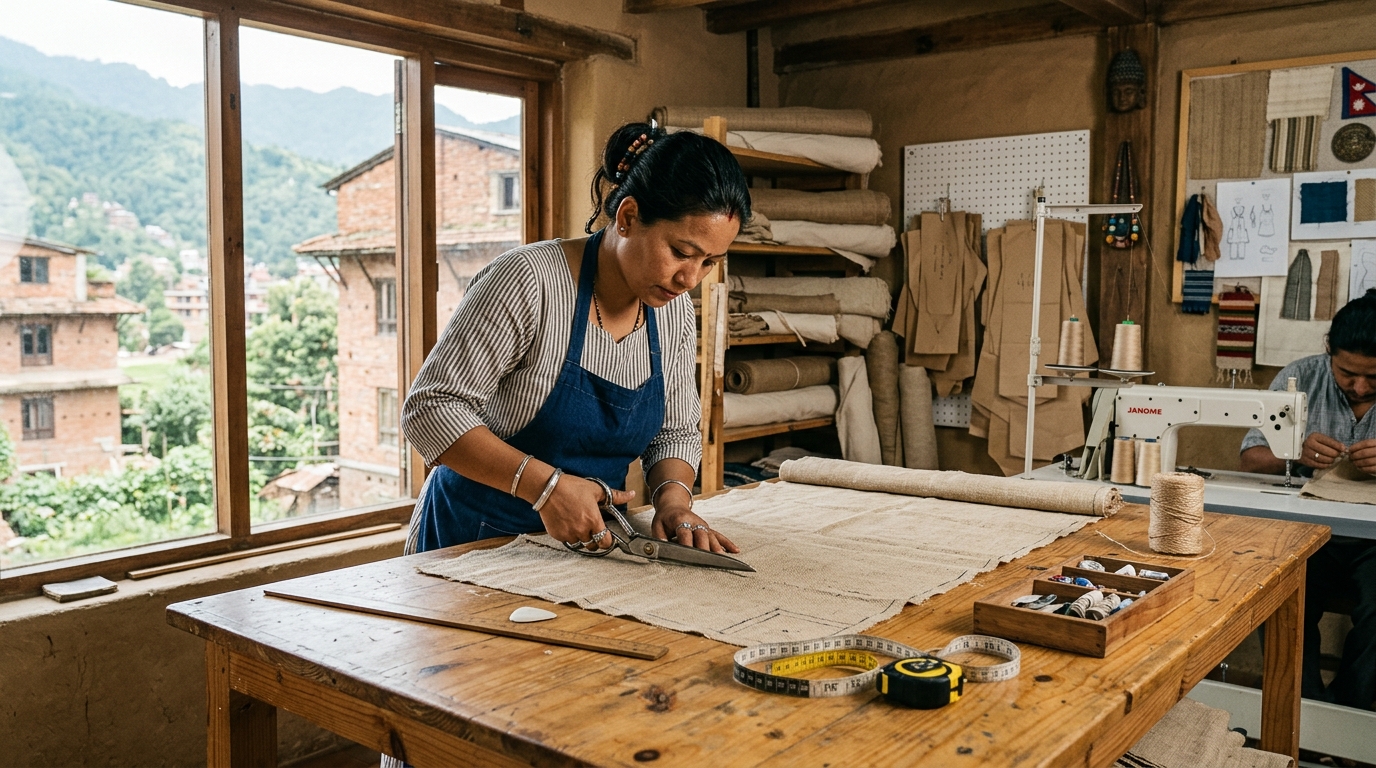
Small-batch tailoring in our Kathmandu workshop with low-waste pattern layouts and natural botanical dye baths.
What We've Done So Far
Small numbers, but real ones. Every metric here is something we can trace back to a person, a workshop, or a piece of land.
100%
Natural Fiber Purity
Zero synthetic polyester or nylon blended into our cloth.
48+
Artisans & Weavers
Women artisans employed across Lalitpur loom circles.
0 Liters
Synthetic Chemical Dyes
Only wild botanicals, walnut hulls, and undyed fibers used.
What we stand for.
These aren't marketing promises. They're the rules we built the workshop around, and we publish them because we want you to hold us to them.
Fair Living Wages Reviewed Annually
We benchmark wages against real Kathmandu Valley living costs rather than legal minimum thresholds.
Daylight Workshops & Ergonomic Seating
Natural skylight windows and ergonomic bench setups for every seamstress and cutter.
Youth Artisan Apprenticeship Funds
Investing 5% of net proceeds into teaching traditional pit-loom weaving to younger generations in Patan.
Experience Himalayan Cloth in Person
Request a physical fabric swatch book containing samples of wild hemp, organic cotton, and hand-spun pashmina, or schedule a visit to our Patan studio.